
 Click main image to view in full screen.
Cost Accounting Analysis (PowerPoint PPT Slide Deck)
PowerPoint (PPT) 32 Slides


COST OPTIMIZATION PPT DESCRIPTION
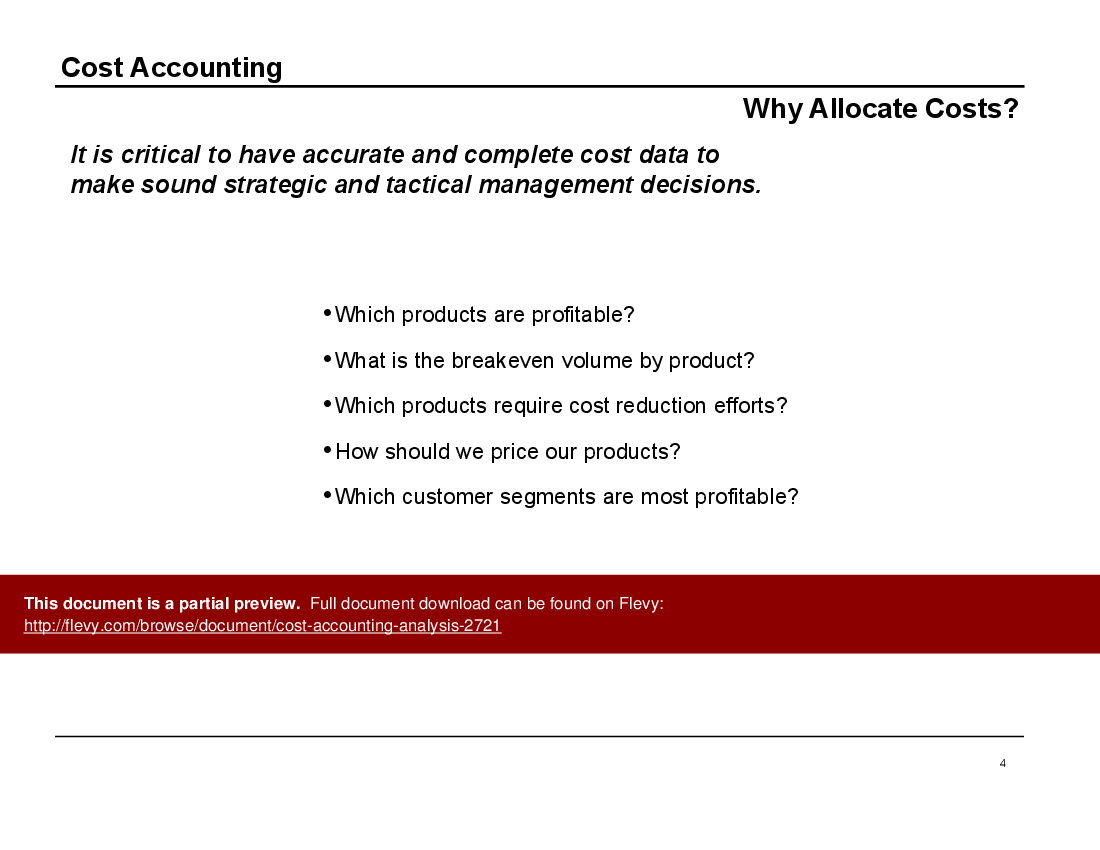
It is critical to have accurate and complete cost data to make sound strategic and tactical management decisions. Most companies lack accurate cost data by product.
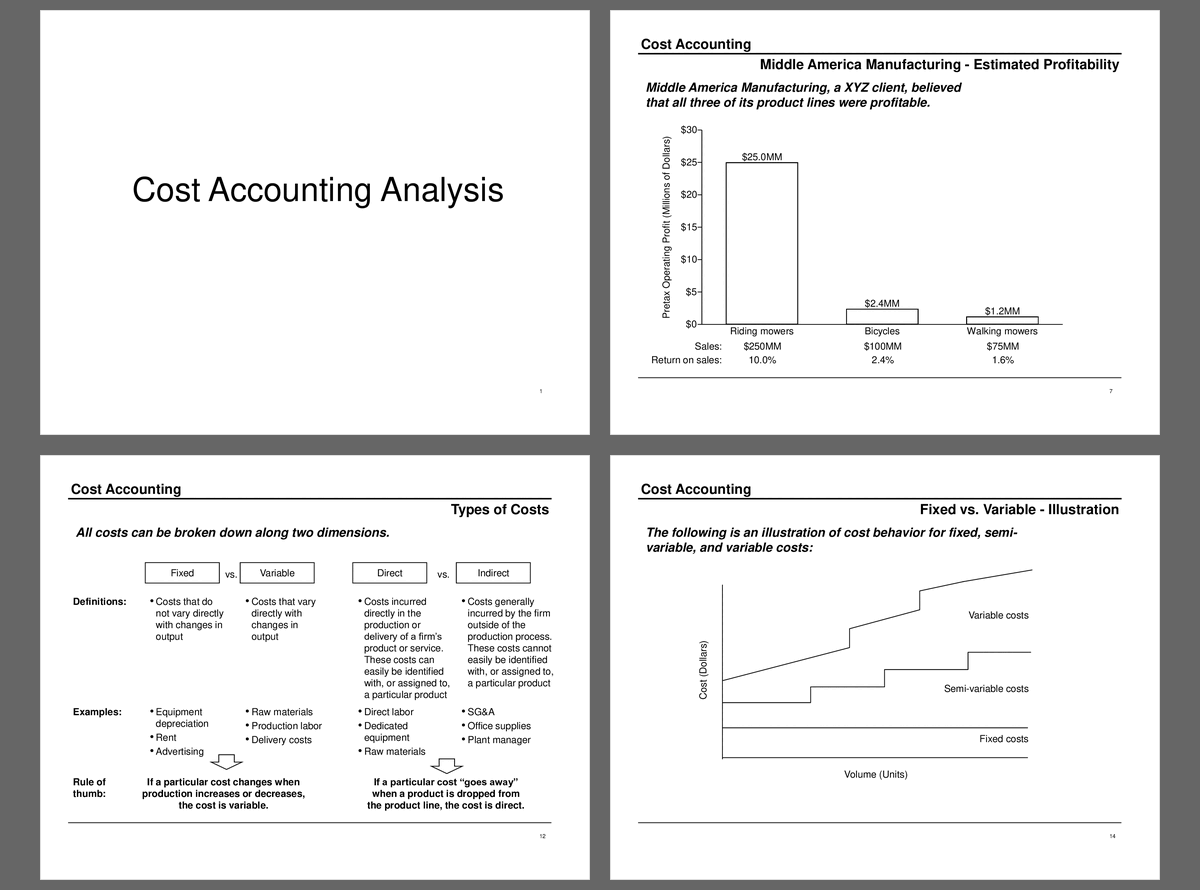
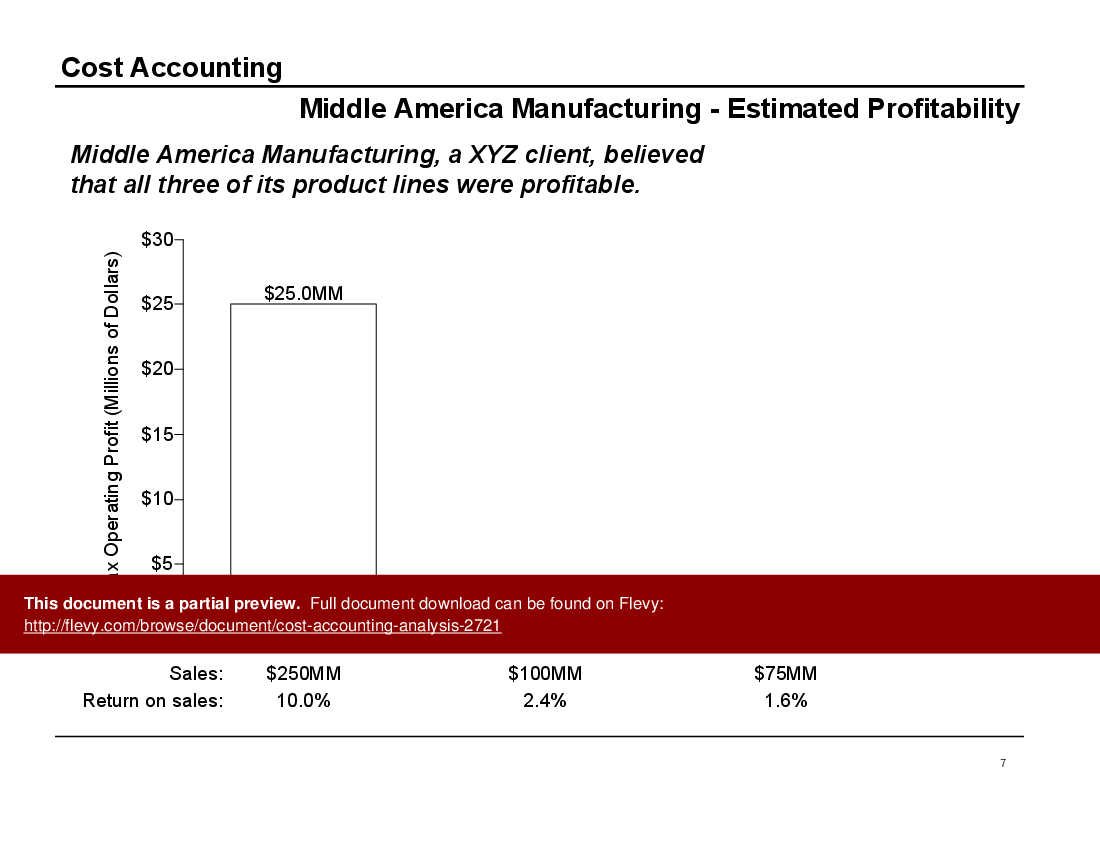
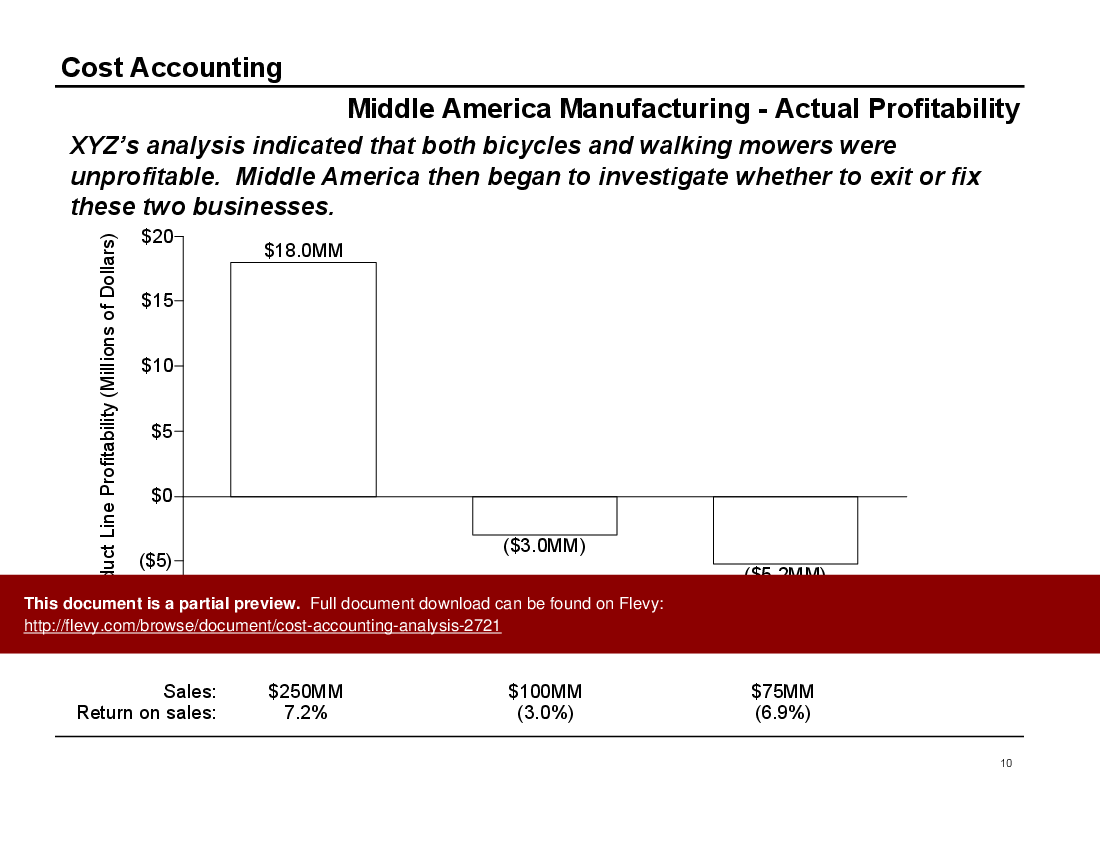
This document dives deep into the nuances of cost allocation, providing a comprehensive analysis that can help you identify which of your products are truly profitable. The case study of Middle America Manufacturing reveals the stark difference between perceived and actual profitability, highlighting the importance of accurate cost data. This kind of insight can be pivotal when deciding whether to continue, exit, or revamp certain product lines.
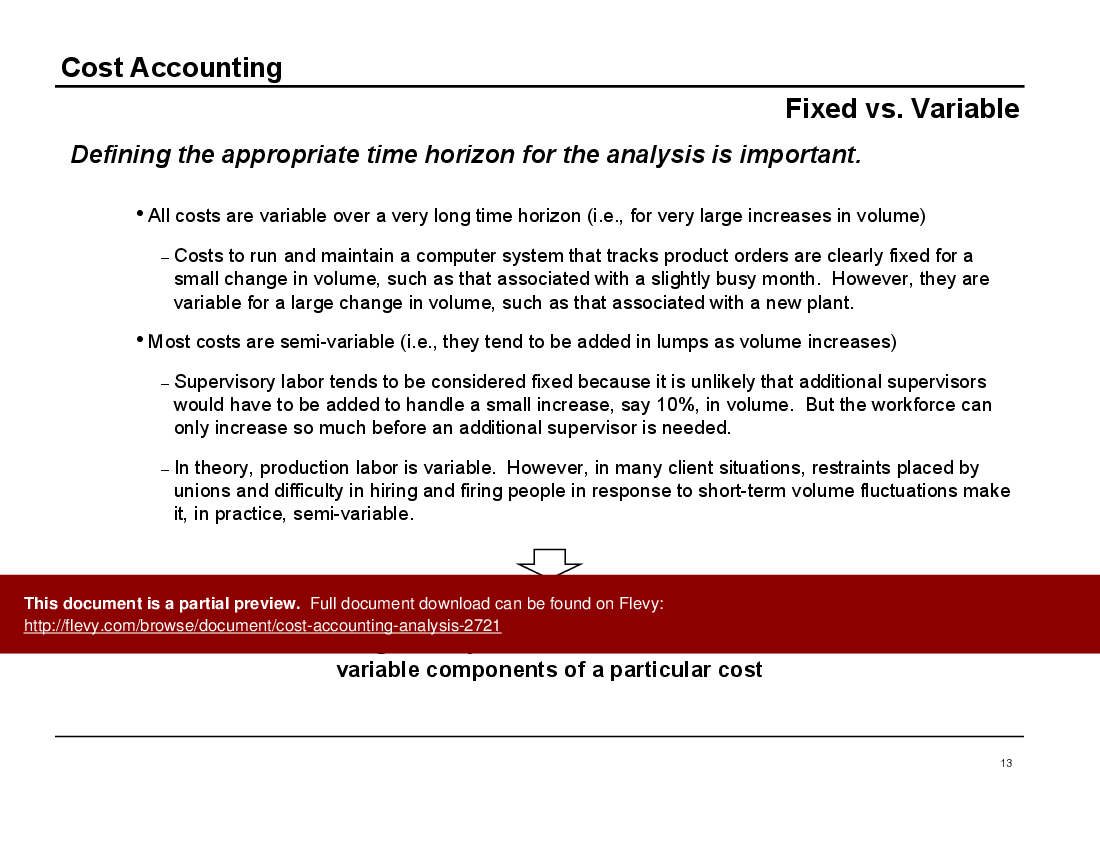
You’ll also find a detailed discussion on fixed versus variable costs, emphasizing the significance of defining the appropriate time horizon for your analysis. This section clarifies how costs can behave differently over varying volumes, offering practical examples such as supervisory labor and production labor. Understanding these distinctions can aid in more precise budgeting and forecasting.
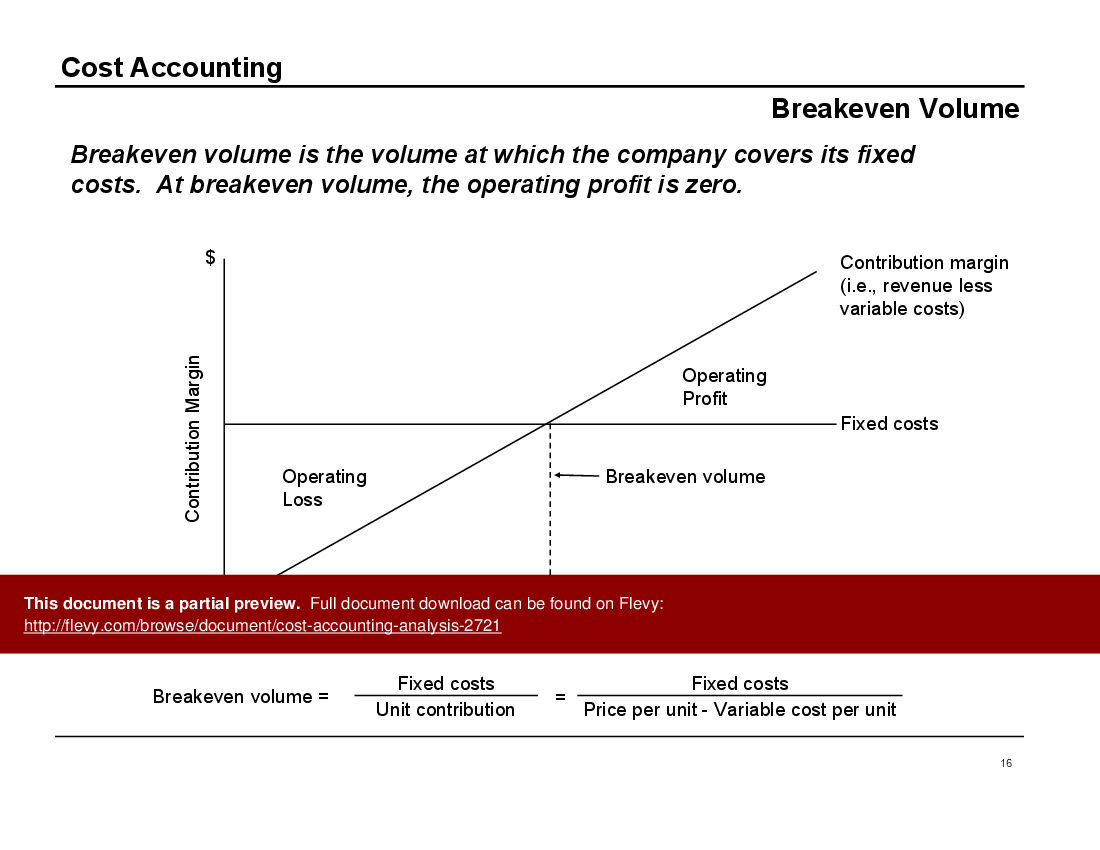
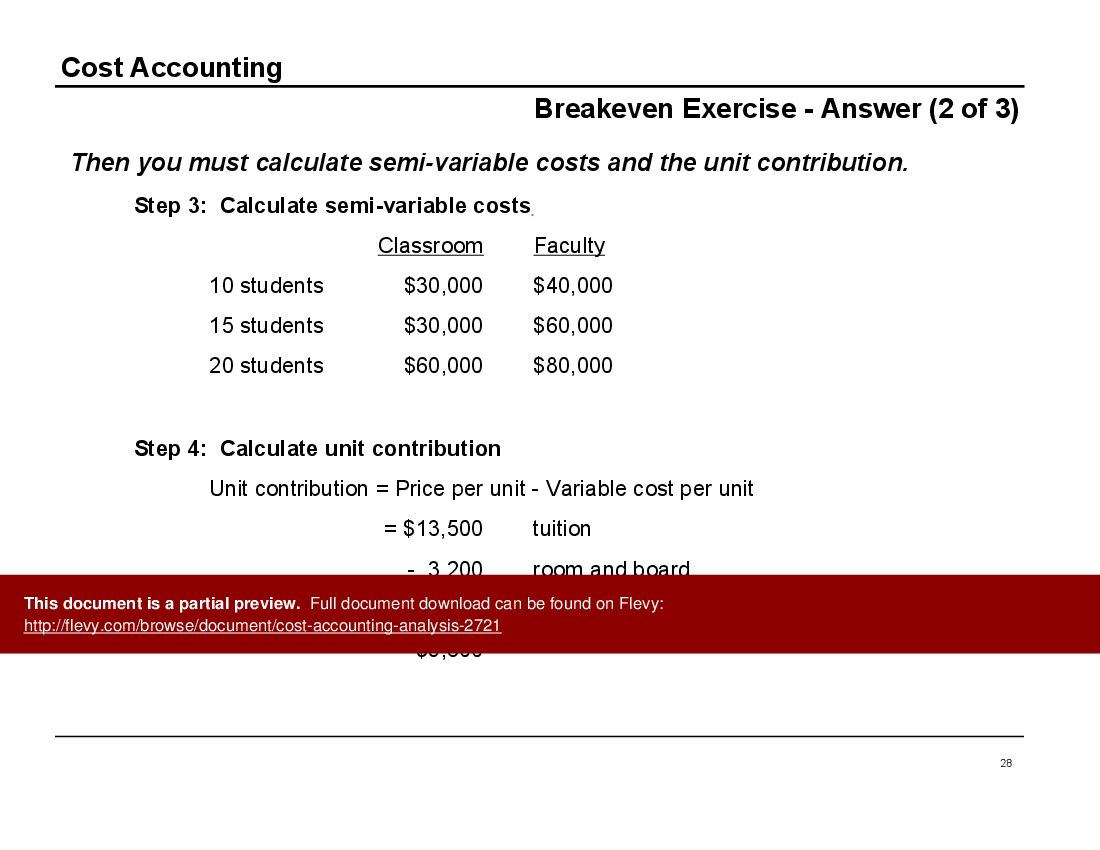
The document further explores the concept of breakeven volume, illustrating how to determine the point at which your company covers its fixed costs. This is crucial for setting realistic sales targets and pricing strategies. The graphical representation simplifies the concept, making it easier to grasp and apply to your own business scenarios.
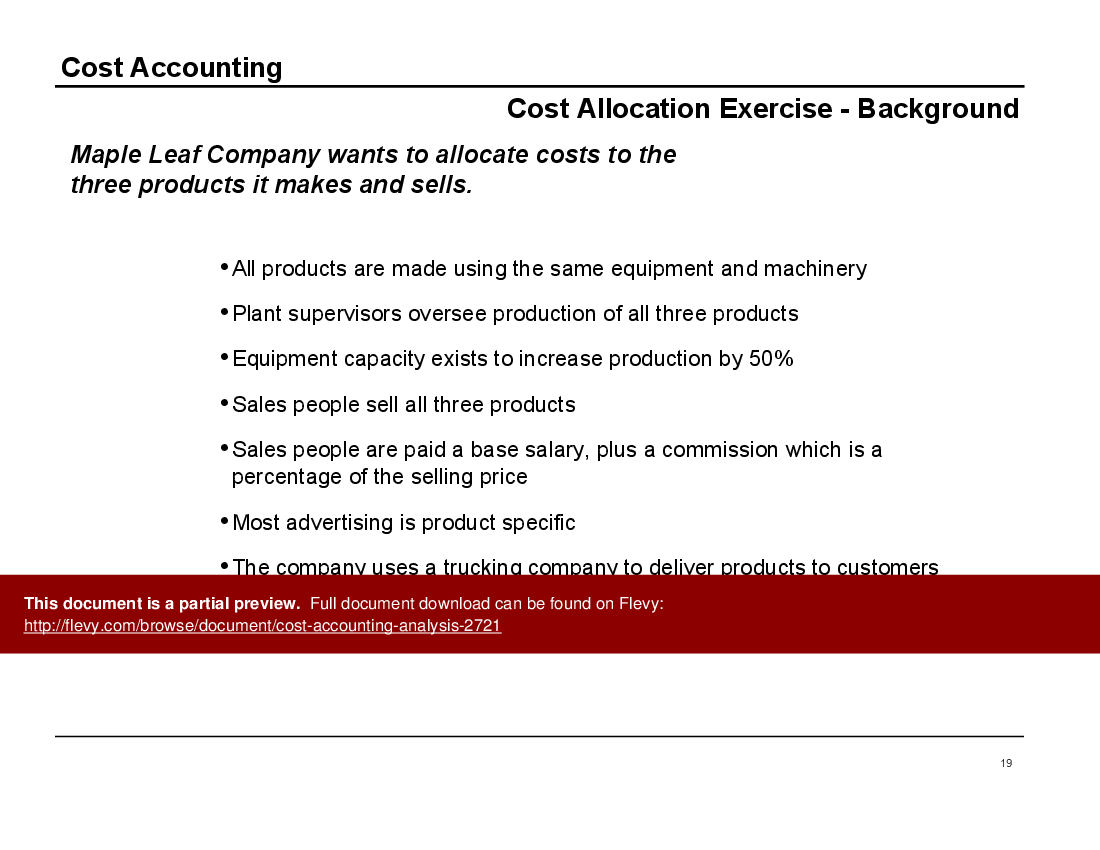
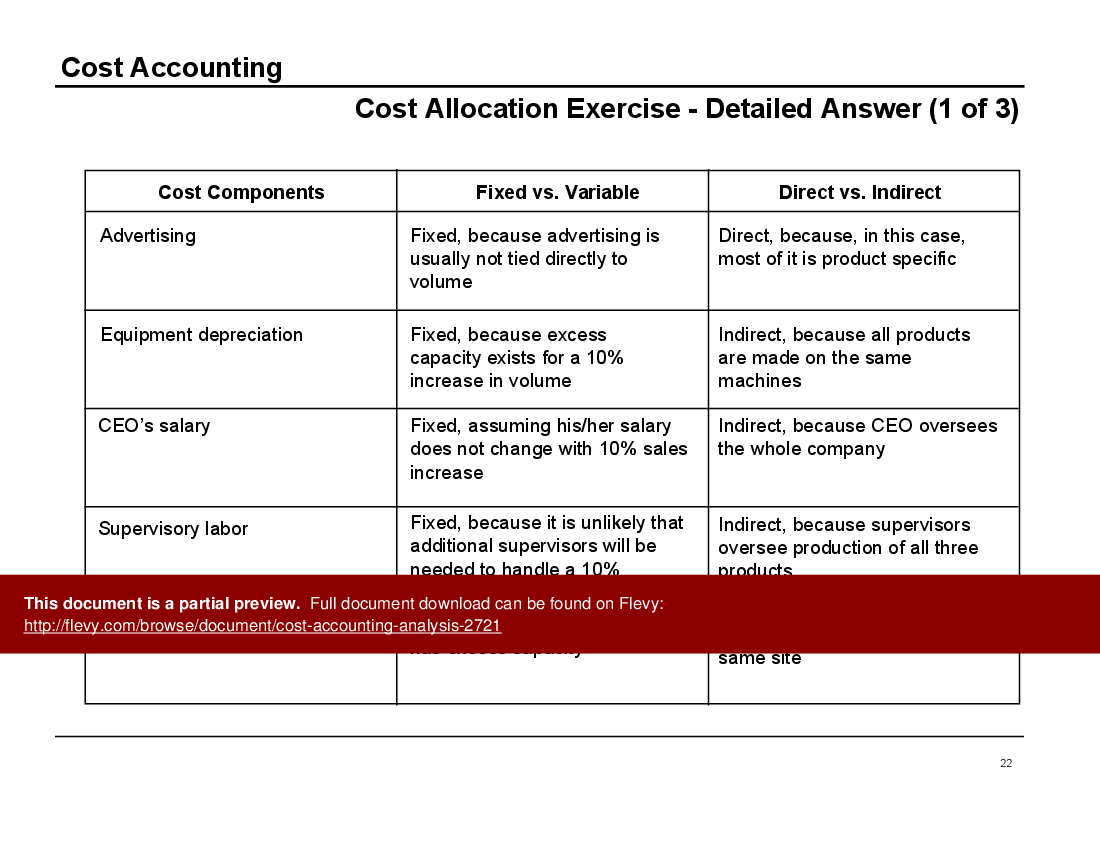
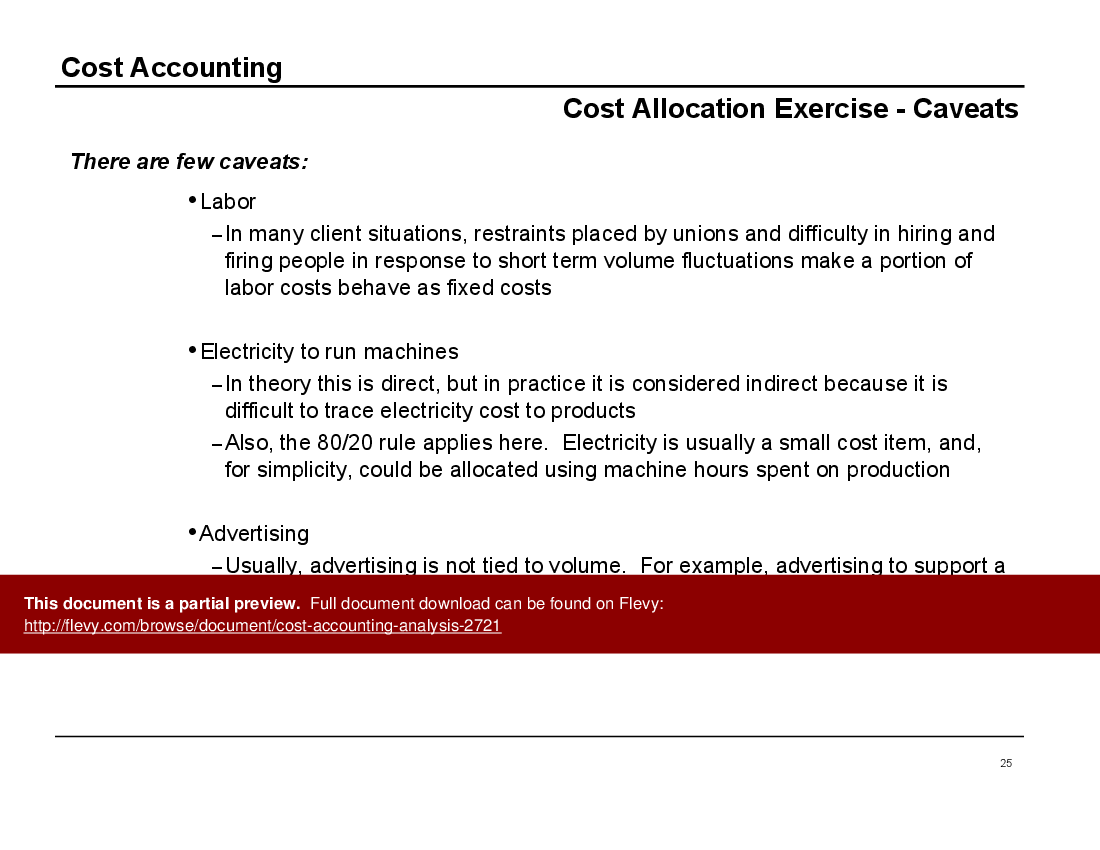
The cost allocation exercise provides a hands-on approach to applying these principles. By breaking down costs into fixed, variable, direct, and indirect categories, you can better understand the financial dynamics of your operations. This exercise, along with the caveats discussed, equips you with the tools to make more informed, strategic decisions.
Got a question about the product? Email us at support@flevy.com or ask the author directly by using the "Ask the Author a Question" form. If you cannot view the preview above this document description, go here to view the large preview instead.
MARCUS OVERVIEW
This synopsis was written by Marcus [?] based on the analysis of the full 32-slide presentation.
Executive Summary
The Cost Accounting Analysis presentation is a consulting-grade resource designed to enhance understanding of cost allocation, product costing, breakeven volume, and cost optimization techniques. This deck, structured with the rigor of McKinsey, Bain, or BCG-quality presentations (not affiliated), provides executives and consultants with the tools to make informed strategic decisions. Users will learn to identify profitable products, determine necessary cost reductions, and optimize pricing strategies based on accurate cost data.
Who This Is For and When to Use
• Financial analysts and accountants responsible for product costing and profitability analysis
• Business executives seeking to improve cost management and pricing strategies
• Consultants advising clients on cost allocation and financial performance
• Operations managers focused on optimizing resource allocation and efficiency
Best-fit moments to use this deck:
• During financial reviews to assess product profitability and cost allocation
• When developing pricing strategies based on comprehensive cost analysis
• In workshops aimed at improving operational efficiency and cost management
Learning Objectives
• Define key cost accounting concepts, including direct vs. indirect and fixed vs. variable costs
• Build a framework for accurate cost allocation across product lines
• Establish breakeven volume calculations to inform pricing and production decisions
• Identify unprofitable product lines and recommend cost reduction strategies
• Analyze case studies to apply theoretical concepts to real-world scenarios
• Develop exercises to reinforce understanding of cost allocation and breakeven analysis
Table of Contents
• Importance of Cost Allocation (page 2)
• Client Example (page 2)
• Definitions of Key Terms (page 3)
• Breakeven Volume Analysis (page 16)
• Cost Allocation Exercises (page 19)
• Key Takeaways (page 31)
Primary Topics Covered
• Cost Allocation Importance - Understanding how accurate cost allocation impacts profitability and strategic decision-making.
• Client Case Study - Analyzing a real-world example to illustrate the effects of cost misallocation on product profitability.
• Cost Definitions - Clarifying terms such as direct vs. indirect costs and fixed vs. variable costs to enhance comprehension.
• Breakeven Volume - Calculating the volume at which total revenues equal total costs, providing insights into pricing and sales strategies.
• Cost Allocation Exercises - Engaging in practical exercises to apply cost allocation concepts to hypothetical scenarios.
• Key Takeaways - Summarizing critical insights to reinforce learning and application of cost accounting principles.
Deliverables, Templates, and Tools
• Cost allocation framework template for assessing product line profitability
• Breakeven analysis calculator for determining necessary sales volumes
• Exercise materials for hands-on practice in cost allocation
• Case study analysis template to evaluate client scenarios
• Summary slides for quick reference on key cost accounting concepts
Slide Highlights
• Visual representation of cost allocation impacts on product profitability
• Detailed breakdown of fixed vs. variable costs with examples
• Breakeven volume graph illustrating the relationship between fixed costs and unit contribution
• Client case study results showcasing the effects of misallocated costs
• Key takeaway slides summarizing essential learnings from the presentation
Potential Workshop Agenda
Introduction to Cost Accounting (30 minutes)
• Overview of cost accounting principles and their importance
• Discussion of key definitions and concepts
Cost Allocation Techniques (60 minutes)
• Interactive session on cost allocation methods
• Case study analysis and group discussion
Breakeven Volume Calculation (45 minutes)
• Hands-on exercise calculating breakeven volumes
• Review of results and implications for pricing strategies
Key Takeaways and Q&A (30 minutes)
• Recap of essential insights
• Open floor for questions and discussion
Customization Guidance
• Adjust case study examples to reflect industry-specific scenarios for relevance
• Tailor exercises to focus on particular cost structures relevant to the organization
• Update terminology and metrics to align with company-specific language and practices
Secondary Topics Covered
• Historical context of cost allocation practices
• Common pitfalls in cost allocation and how to avoid them
• Analysis of the impact of shared costs on product profitability
• Strategies for improving accuracy in cost data collection
Topic FAQ
What are the typical steps to perform a cost allocation and profitability review for product lines?
A typical review follows the learning objectives: define cost categories (direct/indirect, fixed/variable), build an allocation framework across product lines, calculate breakeven volumes, identify unprofitable products, and recommend cost-reduction or pricing changes — a five-step approach ending with actionable recommendations.How do I calculate breakeven volume for a product?
Breakeven volume is calculated by dividing total fixed costs by the unit contribution margin, where unit contribution margin equals selling price per unit minus variable cost per unit; this formula determines the minimum sales volume needed to cover fixed costs.What is activity-based costing and when should I consider it?
Activity-based costing allocates overheads to products based on activities that drive costs rather than broad allocation bases; it’s useful when shared costs materially affect product profitability and when more accurate allocation is needed, as described under secondary topics and the glossary entry for activity-based costing.What should I look for when choosing a cost accounting toolkit or template?
Look for templates that enable driver-based allocation, breakeven calculations, hands-on exercises, and case-study analysis. The presence of a cost allocation framework template, breakeven analysis calculator, and exercise materials helps validate methods and speed deployment, such as those included in Flevy’s Cost Accounting Analysis.How long does a typical workshop on cost allocation and breakeven analysis take?
The suggested workshop agenda in the deck totals about 165 minutes: 30 minutes introduction, 60 minutes on allocation techniques, 45 minutes for breakeven calculations, and 30 minutes for key takeaways and Q&A, equating to roughly 2 hours 45 minutes.My company routinely misallocates shared overheads—what practical steps reduce that risk?
The document advises implementing detailed tracking of costs by activity, regularly reviewing allocation methods, and avoiding convenience-based bases; these practices improve accuracy in cost data collection and allocation, with emphasis on detailed activity-level tracking.How can breakeven analysis inform pricing strategy without overstating profitability?
Breakeven analysis identifies the sales volume required to cover fixed costs and reveals the unit contribution needed to reach targets; combining this with product-level allocation clarifies whether current pricing covers both variable and allocated fixed costs, using the breakeven volume calculation.How should I weigh the cost versus benefit of buying a slide/template deck for cost accounting work?
Consider the time saved versus internal analyst effort and the specific deliverables included; a purchasable deck that provides templates, exercises, and a breakeven calculator can speed analysis—note Flevy’s Cost Accounting Analysis is a 32-slide PowerPoint with those deliverables.Document FAQ
These are questions addressed within this presentation.
What is the importance of cost allocation?
Accurate cost allocation is crucial for identifying profitable products, determining pricing strategies, and making informed management decisions.
How can I calculate breakeven volume?
Breakeven volume is calculated by dividing total fixed costs by the unit contribution margin (price per unit minus variable cost per unit).
What are direct and indirect costs?
Direct costs can be traced directly to a product, while indirect costs are not easily assigned to specific products and support overall operations.
Why are costs often misallocated?
Many companies allocate costs based on convenience rather than accuracy, leading to distorted profitability assessments.
What are fixed and variable costs?
Fixed costs remain constant regardless of production volume, while variable costs fluctuate with changes in output levels.
How can I improve cost allocation accuracy?
Implementing detailed tracking of costs by activity and regularly reviewing allocation methods can enhance accuracy.
What is the role of breakeven analysis in pricing?
Breakeven analysis helps determine the minimum sales volume needed to cover costs, informing pricing strategies and sales targets.
How can I apply these concepts in my organization?
Utilize the frameworks and exercises provided in this presentation to assess your current cost allocation practices and identify areas for improvement.
Glossary
• Cost Allocation - The process of assigning indirect costs to different products or services.
• Breakeven Volume - The sales volume at which total revenues equal total costs.
• Direct Costs - Costs that can be directly traced to a specific product.
• Indirect Costs - Costs that cannot be directly traced to a specific product and support overall operations.
• Fixed Costs - Costs that do not change with the level of production.
• Variable Costs - Costs that vary directly with changes in production volume.
• Unit Contribution - The difference between the selling price per unit and the variable cost per unit.
• Cost Behavior - The way in which a cost reacts to changes in production volume.
• Profitability Analysis - The assessment of a product's ability to generate profit.
• Cost Structure - The types and proportions of costs incurred by a business.
• Cost Misallocation - Incorrect assignment of costs that leads to inaccurate profitability assessments.
• Activity-Based Costing - A method of allocating costs based on activities that drive costs, rather than traditional methods.
• Contribution Margin - The revenue remaining after variable costs are deducted, used to cover fixed costs.
• Operating Profit - The profit earned from a firm's core business operations.
• Sales Volume - The number of units sold during a specific period.
• Cost Reduction - Strategies aimed at lowering costs to improve profitability.
• Strategic Decision-Making - The process of making choices that will shape the direction of an organization.
• Financial Performance - A measure of how well a company uses its assets to generate revenue.
• Resource Allocation - The process of distributing available resources among various projects or business units.
• Profit Margin - A measure of profitability calculated as net income divided by revenue.
• Cost Management - The process of planning and controlling the budget of a business.
COST OPTIMIZATION PPT SLIDES
Source: Best Practices in Cost Optimization PowerPoint Slides: Cost Accounting Analysis PowerPoint (PPT) Presentation Slide Deck, Documents & Files